
Step 4 of 5: Build Your Assets
Make money that does not need your hours.
Own something that pays you. Pick one of the 7 streams of income and start your second one. Real estate is where Jemal goes deepest, but it is a menu, not a checklist.
You're done with this step when
- You picked your second streamInterest, dividends, rental income, capital gains, business or royalties.
- You funded it with money you saved for itNever with debt above 10% interest. Your three-month cushion stays untouched.
- The first payment lands in your accountThat is the finish line for this step: money you did not trade more hours for.
Tick each one as you finish it.
The rules on every step
Six guardrails that apply from Step 1 to Step 5. Keep them in mind as you go.
- Start at Step 1 and do one step at a time.
- Give from every paycheck, starting at Step 1. Jemal shares how he tithes as his own practice, not a rule.
- If your job matches retirement savings, take the full match from day one.
- If you share money with someone, do the steps together.
- Get a will and life insurance in place before Step 4.
- Fund a second stream only with money you saved for it, never with debt above 10% interest.
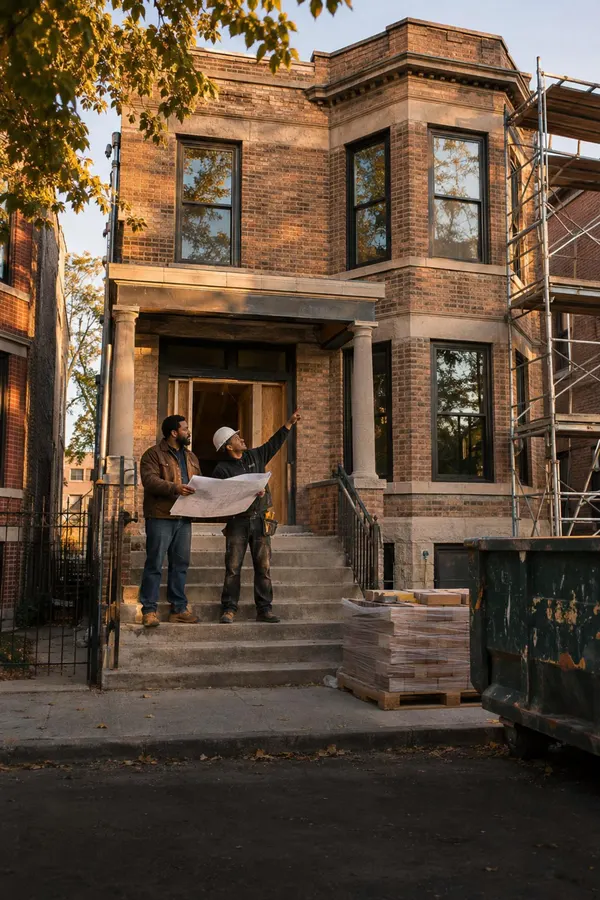
Step 4, explained
Own something that pays you
Up to now, every dollar you earned came from trading your time. Step 4 is where that starts to change. You pick one stream of income that pays you without more hours: rental income, dividends, a business, royalties.
Real estate is where Jemal has the most proof, and it fits a 9 to 5 well. Banks like steady W-2 income, and a building can be bought, managed and grown around a work schedule. But it is one option on the menu, not the only one.
This is also the step where you can lose money. That is why your cushion stays untouched, your protection is in place, and you run the numbers on a real deal before you ever make an offer.
$396,200
was the median net worth of U.S. homeowners. For renters it was $10,400.
Source: Federal Reserve, Survey of Consumer Finances 2022, the most recent edition
Stop trading every hour for every dollar.
Belief 5 of the 9 Beliefs: “Ownership creates options.”See it on a real paycheck
Dana buys her first two-flat
Dana chose real estate. She spent a year studying one neighborhood, then bought a two-flat to live in, using a loan that needed a small down payment.
Her three-month cushion stayed untouched. The Building Fund paid for the down payment, closing costs and a repair reserve.
The first rent payment landed in her account. That is the finish line for this step.
Dana is a sample household, not a real client. The numbers show how the step works.
- Building Fund savedAbout $18,000
- Came fromOvertime plus budget
- She lives inUnit 1
- Tenant rentsUnit 2
- Rent coversAbout half her mortgage
On a 9 to 5, it looks like this
- Your pay stub helps you qualifyLenders look for steady income history. Two years at the same job is a strong start.
- You study on your scheduleResearch one neighborhood on your days off. Learn the rents before you look at prices.
- You start with oneOne building, one business, one stream. Not seven at once.
Where people get stuck
- Buying before running the numbersRun the 70% Rule and the rental cash flow on every deal, every time.
- Using expensive debt to get inFund your first asset with money you saved for it.
- Waiting for the perfect dealTrain your eye on real listings now, so you can move when a good one shows up.
Before you build
How much of your life goes to your 9 to 5?
Answer six quick questions. We'll add up the hours your job takes, including the drive, and show you what that is in years of your life.
Your answers
Change any number and the results update.
Every week your job takes
44.5 hoursAdded up, that is
12.7 years- Growing upWorking yearsLife after workYou todayYour job and commuteEverything else: family, health, faith, fun
Your job will always take time. The question is whether it is the only thing paying for your life. Step 4 is where you start owning things that earn while you sleep, so the hours you give a boss stop being your only source of income.
Show me how to startWaking hours assume 8 hours of sleep. Life expectancy is the U.S. average at birth, and your own may be longer or shorter. Sources: CDC, life expectancy 79.0 in 2024; BLS American Time Use Survey 2024, 8.4 hours on weekdays worked; U.S. Census Bureau, American Community Survey commute times; Gallup, expected vs. actual retirement age; Social Security full retirement age.
Your next five moves
Do them in order. Start with the first one you have not done, then keep going. Times are rough guides.
- 2 hoursPick one stream to study this month
Look at the 7 streams and choose the one that fits your skills, time and savings. One, not seven.
- A few weekendsReal estate: train your eye
Research one neighborhood. Average prices, average rents, what the cash flow looks like. You are not buying yet.
- 20 minCheck if a bank would say yes
Use Property Readiness to see where you stand on credit, debt and down payment before you talk to a lender.
Property Readiness - 1 hourRun a real deal
Take one real listing in your market and run the 70% Rule and Rental Cash Flow on it.
Rental Cash Flow - 30 minBusiness: write it down
Name one problem in your workplace or neighborhood nobody solves well. Write one paragraph on the business you would build to solve it, and who it serves.
Watch
From the 9 to 5 Millionaire Network.
Stuck here?
Do I have to start with real estate?
No. Real estate is where Jemal has the most proof, but dividends, a business or royalties all count. The rule is that it pays you without you trading more hours.
How much do I need for a first property?
It depends on the loan. Owner-occupied loans can need far less down than investment loans, which is why house hacking is a common first move. Use Property Readiness, then talk with a lender.
Can I use a credit card or a personal loan to start?
No. A second stream funded with expensive debt can sink your foundation. Use money you saved for it.
Is this guaranteed to work?
No investment is. This is the step where you can lose money, which is why the cushion, the protection and the numbers come first. Talk with licensed professionals before you buy.
What if I do not want to be a landlord?
Then pick another stream, or look at a property manager in your numbers from day one. A building that only works if you do all the work is a second job, not an asset.
How do I find a lender who works with first-timers?
Ask people in your network who have bought recently, and talk to at least two lenders. Compare the full cost of the loan, not just the rate.
Go deeper
Make Real Estate Real
Jemal's real estate investing system, taught with his full team: finding deals, financing, rehab and rental strategy. Want Jemal in your corner? Apply for Mentorship.